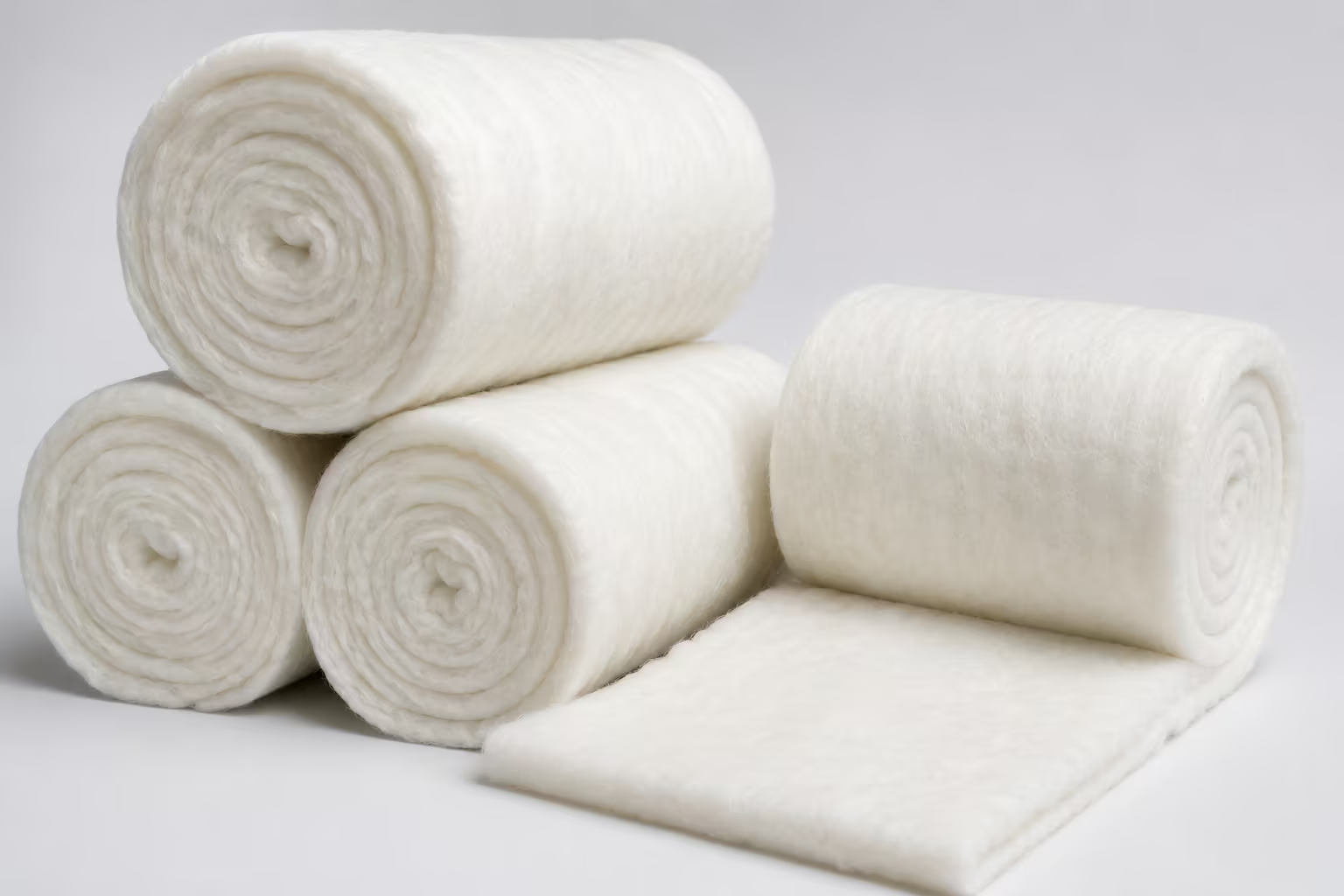
Orthopaedic padding is a soft material generally placed beneath an outer casting material as part of an orthopaedic casting application. It forms a protective intermediate layer between the body and the rigid casting material applied on top of it.
You may also see this type of product described as orthopaedic cast padding, under cast padding, cast padding, or padding for casts. The terminology can vary depending on the manufacturer, product specifications, and market.
This article explains what orthopaedic padding is, where it fits within a casting system, what it generally does, the related terms used for this product category, and the factors businesses may consider when reviewing different padding products.
Important: This article provides general educational information only. It does not provide medical advice or instructions for applying casts. Casting procedures should follow appropriate professional guidance and product instructions.
What Is Orthopaedic Padding?
Orthopaedic padding is a soft, flexible material used as a cushioning layer within a casting application. It sits between the skin (or an inner protective layer, depending on the application) and the rigid outer casting material, such as plaster of Paris (POP) bandage or fiberglass casting tape.
In general terms, padding of this kind is understood to help cushion the area being cast, distribute pressure more evenly under the rigid outer layer, and reduce direct friction between the skin and the cast. These are widely recognised, general functions of cast padding as a product category rather than claims about any specific product’s performance.
Depending on the manufacturer, orthopaedic padding may be supplied in different forms:
- Widths
- Lengths
- Thicknesses
- Material compositions
- Roll formats
- Packaging configurations
The exact characteristics of a given product depend on its individual design and the manufacturer’s specifications, which is why reviewing the product page for a specific item, rather than relying on the category name alone, gives the clearest picture.
Where Does Orthopaedic Padding Fit in a Casting Application?
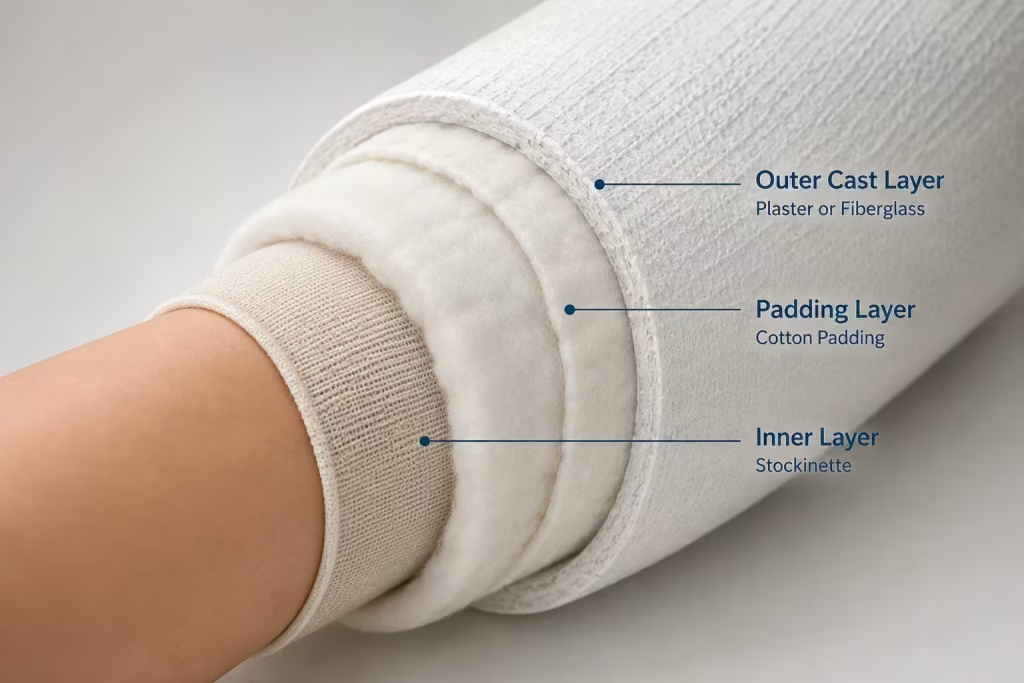
A casting application typically involves more than one material working together. The exact combination depends on the type of cast, the materials being used, and the requirements of the particular application.
In general, a casting system may include:
- An inner or protective layer, such as a stockinette, depending on the application.
- A padding layer, such as orthopaedic or undercast padding the focus of this article.
- An outer casting material, such as plaster of Paris (POP) bandage or fiberglass casting tape, which provides the cast’s rigid structure.
Orthopaedic padding, therefore, forms part of a broader system rather than functioning as a standalone solution. Its role is to sit between the more rigid outer layer and the body, cushioning the area beneath the cast.
Different products may have different specifications and intended uses. For this reason, users and businesses should always review the information provided for the specific product they are considering.
Orthopaedic Padding, Under Cast Padding, and Cotton Cast Padding
Several closely related terms are used across the industry to describe this product category, and they’re often used interchangeably even though the products behind them can differ:
| Term | General Meaning |
| Orthopaedic padding | The broad category term for padding used in casting applications |
| Orthopaedic cast padding | Padding associated specifically with casting applications |
| Under cast padding | Padding intended for use beneath a cast |
| Cast padding | A shorter, common variant of the above terms |
| Cotton cast padding | Padding made from cotton or cotton-based materials |
| Padding for casts | A plain-language search variant of the same category |
While these terms describe closely related products, manufacturers may use different names for similar product categories, and specifications can still differ between products even when the same term is used. Two products both described as “cast padding,” for example, may vary in material composition, dimensions, thickness, roll construction, and packaging.
Because of this, the product name alone doesn’t provide complete information; reviewing the manufacturer’s specifications for the individual product gives a clearer, more reliable picture than the category name does.
Materials, Sizes, and Packaging
Different manufacturers use different materials and formats when producing padding for casting applications. Cotton and cotton-based materials are commonly associated with this category, which is why the term cotton cast padding is also widely used,d though the exact composition varies by manufacturer.
Orthopaedic cast padding is most commonly supplied in rolls, with the roll format allowing manufacturers to offer a range of dimensions suited to different applications and markets. When reviewing a specific product, the specifications businesses typically look at include:
- Material composition:
The type of material used (e.g., cotton or cotton-based fibres)
- Fibre structure:
How the material is constructed and arranged
- Thickness and density:
How the padding is built up, which affects cushioning
- Available sizes:
The range of widths and lengths that a manufacturer offers
- Packaging:
How rolls are packed and supplied, which matters particularly to distributors and suppliers managing storage and logistics
- Product identification:
Clear naming and labelling that help distinguish between products within the same category
Because specifications can vary meaningfully between manufacturers, businesses should review the details for the individual product they’re evaluating rather than assuming every product within the category is equivalent.
What Should Businesses Consider When Sourcing Orthopaedic Padding?
Businesses sourcing orthopaedic padding, whether as distributors, suppliers, or healthcare product partners,s typically have different priorities depending on their market and supply chain. Some general factors worth reviewing include:
Product specifications.
Clear documentation of dimensions, material composition, and format helps businesses understand exactly what they’re sourcing.
Manufacturing background.
Understanding a manufacturer’s history and product focus is often relevant when building a longer-term business relationship.
Packaging details.
Distributors and suppliers typically need clear information on how products are packaged and supplied for storage and transport.
Quality and certification information.
Where a manufacturer holds relevant quality certifications or registrations, this information should be clearly and specifically stated. Any certification or quality claim should be supported by current, verifiable documentation.
Product availability.
It’s also worth understanding which products are currently available and whether a manufacturer’s range is actively developing.
The relative importance of each factor will vary depending on the individual business and market.
Orthopaedic Padding in the Healthcare Product Supply Chain
Orthopaedic padding typically moves through several stages of a healthcare product supply chain before reaching its end market:
Manufacturer → Distributor → Supplier or Healthcare Product Business → Healthcare Setting or End User
Clear communication matters at each stage. For manufacturers, providing precise product information helps distributors and business partners understand exactly what they’re working with. For distributors and suppliers, accurate specifications make it easier to identify products that match their requirements and to pass that clarity on to their own customers.
Caston Orthopaedic Padding by Al Jaza Enterprises
Caston Orthopaedic Padding is the current product offered by Al Jaza Enterprises within the orthopaedic padding category, and it forms part of the company’s current focus on products associated with casting applications.
Al Jaza Enterprises is a Pakistan-based manufacturing company established in 1998. As the company continues to develop its manufacturing capabilities, its website will provide information about current and future product categories as they become available, alongside general educational content where visitors can learn about medical product categories, healthcare terminology, and related topics.
It’s worth understanding the distinction between a general product category and a specific manufacturer’s product: orthopaedic padding describes the wider category, while Caston Orthopaedic Padding identifies a specific product offered by Al Jaza Enterprises. Keeping this distinction in mind is useful when comparing different products described as undercast padding or orthopaedic cast padding; manufacturer specifications remain the most reliable point of comparison.

For specific product details and specifications, visit the Caston Orthopaedic Padding product page. To learn more about the company’s manufacturing background, visit the About Us page.
Frequently Asked Questions About Orthopaedic Padding
What is orthopaedic padding used for?
Orthopaedic padding is generally used as a cushioning layer beneath an outer casting material, helping distribute pressure and reduce friction between the skin and the rigid cast.
Is orthopaedic padding the same as undercast padding or cast padding?
These terms are often used interchangeably and describe closely related products, but terminology and specifications can vary between manufacturers, so it’s worth checking the specific product details rather than assuming the terms are identical.
What is orthopaedic padding typically made from?
Cotton and cotton-based materials are commonly associated with this category, which is why the term “cotton cast padding” is also used. The exact material composition depends on the manufacturer and product.
What sizes does orthopaedic padding come in?
Orthopaedic padding is generally supplied in rolls, available in a range of widths and lengths depending on the manufacturer’s product range. Specific size availability should be confirmed on the individual product page.
What should a business check before sourcing orthopaedic padding?
Businesses typically review product specifications, material composition, dimensions, packaging, manufacturing background, and any relevant quality or certification documentation.
What is Caston Orthopaedic Padding?
Caston Orthopaedic Padding is the current orthopaedic padding product offered by Al Jaza Enterprises. Product-specific information is available on the dedicated product page.
Where can I source Caston Orthopaedic Padding from Al Jaza Enterprises?
Businesses interested in sourcing Caston Orthopaedic Padding can find product details on the dedicated product page or contact Al Jaza Enterprises directly through the company’s About Us page.
Conclusion
Orthopaedic padding is a well-established product category used as a cushioning layer within casting applications, sitting between the body and the rigid outer casting material to help distribute pressure and reduce friction. It’s also known by several closely related names, including orthopaedic cast padding, undercast padding, cast padding, and padding for casts, though specifications can differ between manufacturers even when the same term is used.
Because products can vary in material composition, dimensions, thickness, and packaging, comparing the specifications provided by the manufacturer rather than relying on category terminology alone is the most reliable way to evaluate a product.
As Al Jaza Enterprises continues to develop its product portfolio, orthopaedic padding, and specifically Caston Orthopaedic Padding, remains a core part of the company’s current focus. For more general information about medical and surgical product categories, explore our Medical Knowledge Center.